
If you have ever picked up a bag of chips and felt a generous cushion of gas inside, you have encountered nitrogen gas at work. While many consumers casually refer to it as “air-filled packaging,” the atmosphere inside most sealed snack bags, coffee pouches, and fresh-cut produce containers is far from the 21% oxygen, 78% nitrogen, and trace gases that make up ambient air. Instead, the internal headspace has been deliberately purged and refilled with nearly 100% nitrogen—an inert gas chosen specifically for its protective characteristics.
The use of nitrogen in food packaging represents a decades-long refinement of preservation science. It addresses a fundamental challenge: how to extend shelf life without resorting to artificial chemical preservatives that consumers increasingly wish to avoid. As clean-label demands grow, nitrogen gas has become a quiet workhorse of the modern food supply chain.
Understanding the Enemy: Why Packaged Food Spoils
To understand why nitrogen gas is used in food packaging, it is first necessary to grasp the primary mechanisms of food deterioration in a sealed package.
Oxidative Rancidity (Lipid Oxidation): Foods high in unsaturated fats—such as nuts, potato chips, snack foods, and coffee beans—are highly susceptible to oxidation. When oxygen molecules attack the double bonds in fatty acids, they initiate a chain reaction that generates volatile aldehydes and ketones, which manifest as off-flavors, stale odors, and rancid taste. Even minimal residual oxygen can trigger this autocatalytic process, drastically shortening shelf life.
Aerobic Microbial Growth: Molds, yeasts, and many spoilage bacteria require oxygen for respiration. A package headspace containing standard air provides an ideal environment for these aerobic microorganisms to thrive. While nitrogen does not directly kill microbes, removing oxygen suffocates obligate aerobes, slowing spoilage significantly.
Enzymatic Browning and Nutrient Degradation: Oxygen accelerates the enzymatic browning of cut fruits and vegetables (polyphenol oxidase activity), diminishes the vitamin C content of juices, and degrades natural pigments, leading to color fading and nutrient loss.
Moisture Migration and Texture Compromise: In crispy or dry products such as crackers, biscuits, and extruded snacks, atmospheric humidity inside the package—often introduced with ambient air—causes a loss of crunch. Oxygen itself does not solely cause this, but the process of hermetically sealing a package with dry, inert nitrogen allows the product to maintain its desired water activity and texture.
What Is Nitrogen Flushing? The Basics of Modified Atmosphere Packaging
Nitrogen flushing, also referred to as gas flushing or nitrogen gas packaging, is a process in which liquid or gaseous nitrogen is injected into a package immediately before sealing to displace the atmospheric oxygen. This procedure falls under the broader umbrella of modified atmosphere packaging (MAP)—a technique defined by the deliberate alteration of the gaseous environment surrounding a food product to prolong its shelf life while preserving sensory and nutritional quality.
A typical nitrogen flushing operation on a form-fill-seal (FFS) packaging line works as follows:
- The package or pouch is formed.
- The food product is deposited inside.
- A stream of high-purity nitrogen is directed into the headspace, flushing out the ambient air.
- The package is immediately sealed, trapping a micro-atmosphere that can contain less than 1% residual oxygen, or even below 0.5% in sensitive applications.
The goal is not to create a vacuum—indeed, many packages intentionally retain a positive pressure of nitrogen—but to achieve a critically low residual oxygen level that effectively arrests oxidative and aerobic spoilage reactions.
The Inherent Properties That Make Nitrogen the Gas of Choice
Several gases could theoretically displace oxygen, yet nitrogen has emerged as the dominant choice across the food industry. The reasoning lies in its unique physicochemical profile:
Chemical Inertness
Nitrogen is a nearly inert diatomic gas with a strong triple bond (N≡N bond energy of 941 kJ/mol), rendering it extremely unreactive under ambient food storage conditions. Unlike oxygen, it does not participate in combustion, lipid oxidation, or metal corrosion. Unlike carbon dioxide, it does not dissolve readily into food matrices to form carbonic acid, which can impart a sour taste to delicate products.
Low Solubility in Water and Lipids
Carbon dioxide dissolves into both water and fat fractions of food, potentially causing package collapse (vacuum-like shriveling) and undesirable acidic or “fizzy” sensory notes. Nitrogen exhibits minimal solubility, meaning the product neither absorbs the gas in ways that alter flavor nor experiences the structural collapse known as “package caving” seen with CO₂-based MAP. This makes nitrogen uniquely suitable for low-moisture, high-fat snack products.
Displacement of Oxygen Without Reactive Side Effects
Some active packaging solutions employ oxygen scavengers (iron-based sachets or enzyme-based inserts). While effective, they add complexity and potential consumer confusion. Nitrogen flushing is a physical displacement process: it simply pushes out oxygen without leaving residues or requiring additional internal components.
Dryness and Cleanliness
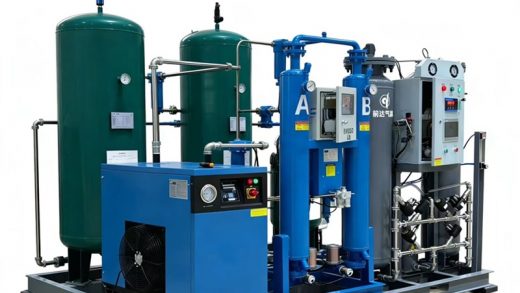
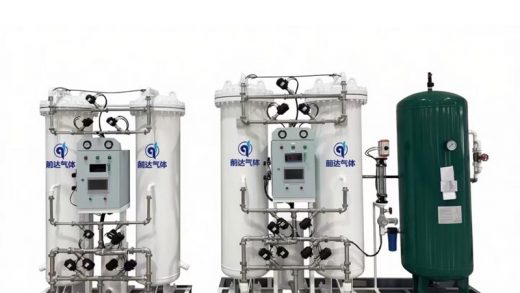
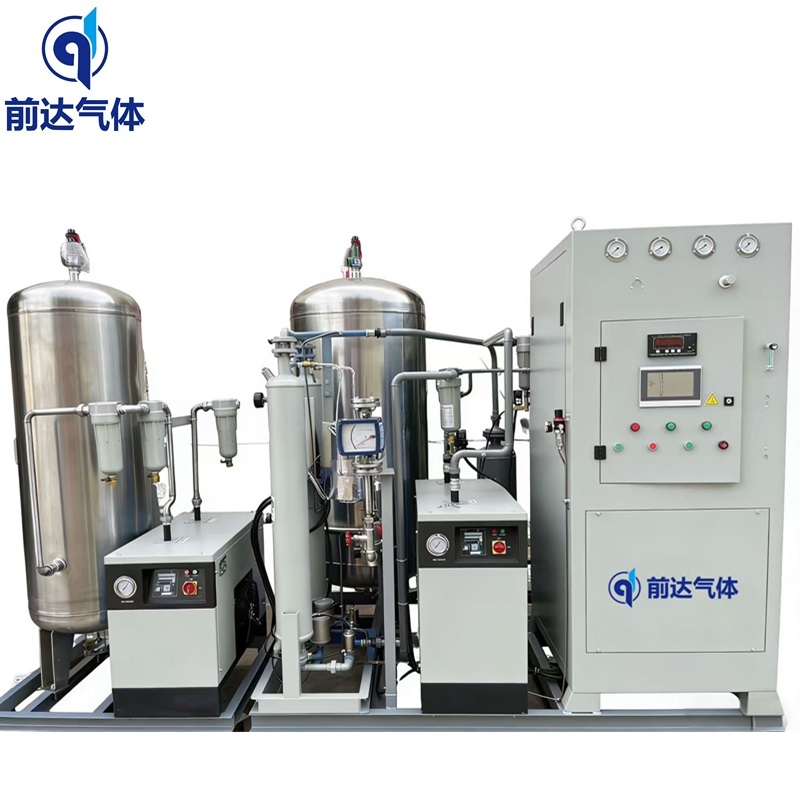
Food-grade nitrogen, whether generated on-site through PSA (pressure swing adsorption) or membrane separation, is extremely dry—often with a dew point below –40°C. This low-moisture characteristic prevents hydration of dry, hygroscopic products such as milk powder, instant coffee, and crisp snacks, simultaneously inhibiting the hydration-mediated degradation of sensitive bioactive compounds.
Abundance and Cost-Effectiveness
Comprising approximately 78% of the Earth’s atmosphere, nitrogen is an inexhaustible, low-cost resource. On-site nitrogen generation systems can produce a continuous flow of food-grade nitrogen at a fraction of the cost of delivered cylinders or liquid nitrogen dewars, making the economics of MAP favorable even for high-volume snack and bakery operations.
Nitrogen Packaging Versus Vacuum Packaging: Why Not Just Remove the Air?
A reasonable question often arises: if oxygen is the problem, why not simply pull a vacuum on the package and omit any gas entirely? This is done extensively for products like cured meats and block cheese, where a tight vacuum skin conforms to the product and provides an oxygen-free environment. However, for many product categories, nitrogen gas flushing is demonstrably superior.
Product Protection: Many fragile products—potato chips, extruded corn puffs, wafer cookies, taco shells—would be crushed under the mechanical pressure of a vacuum-sealed bag. The cushion of nitrogen gas acts as a protective pillow, absorbing external shocks during transport and handling. The term “pillow pack” is widely used in the snack industry precisely because of this shock-absorbing headspace.
Package Integrity: Vacuum packages that must maintain a tight seal around irregularly shaped products are prone to micro-leaks. A bag under slight positive nitrogen pressure will resist inward air ingress more effectively; if a pinhole leak occurs, gas flows outward initially, delaying oxygen entry.
Consumer Perception: A flat, vacuum-compressed package containing a fragile snack is not only unattractive but would also settle into a compacted, broken mass. The nitrogen-filled “pillow” signals freshness and quality to consumers, even if the true protective function of the gas is invisible.
Product Separation: In packages containing powdered or granular goods (grated cheese, instant coffee, flour mixes), vacuum removal of air can cause product clumping and bridging. Nitrogen gas flushing leaves the particles free-flowing.
Nitrogen Compared to Carbon Dioxide in MAP Applications
Carbon dioxide is the other widely used MAP gas, valued for its bacteriostatic and fungistatic properties—it dissolves into food moisture and lowers pH, suppressing microbial metabolism. However, CO₂ is not a universal solution.
| Parameter | Nitrogen (N₂) | Carbon Dioxide (CO₂) |
|---|---|---|
| Reactivity with food | Inert, no off-flavors | Forms carbonic acid, may cause sour taste |
| Solubility in fat/water | Negligible | High; can cause package collapse |
| Anti-oxidative effect | Excellent (displaces O₂) | Limited direct antioxidant effect |
| Antimicrobial effect | Indirect (O₂ removal) | Direct (bacteriostatic) |
| Suitability for snacks/coffee | Ideal | Unsuitable for low-moisture, high-fat foods |
| Package shape retention | Maintains pillow shape | May cause vacuum caving |
In practice, high-moisture, perishable items such as raw meat, poultry, and fresh pasta often employ a mixed gas atmosphere—typically 70%–80% oxygen (to retain fresh red meat color) with 20%–30% CO₂ (for microbial inhibition), or a nitrogen-CO₂ mix for cooked meats. For dry, fat-rich, and crunchy snack products, 100% nitrogen flushing remains the gold standard, often achieving residual oxygen levels below 1% and extending the shelf life of deep-fried snacks from mere days to several months.
What Types of Foods Use Nitrogen Packaging?
The application range of nitrogen gas packaging spans a remarkably diverse product portfolio:
- Salty snacks and chips: Potato chips, tortilla chips, extruded puffs, pretzels.
- Nuts and seeds: Roasted almonds, peanuts, sunflower seeds, trail mixes—all rich in unsaturated fats prone to rancidity.
- Coffee and tea: Whole bean and ground coffee are aggressively flushed with nitrogen immediately after roasting to prevent staling and off-gassing. Nitrogen flushing of coffee bags is often followed by the incorporation of a one-way degassing valve, allowing CO₂ released by fresh roast coffee to escape without re-admitting oxygen.
- Dried dairy products: Powdered milk, whey protein, infant formula, where both oxidation and moisture pickup would be detrimental.
- Fresh-cut produce: Bagged salad greens, shredded lettuce, and vegetable mixes—although here, in contrast to dry snacks, a low-oxygen nitrogen atmosphere must be carefully balanced, as excessively low O₂ can induce anaerobic respiration and off-odors in living tissue.
- Bakery goods: Tortillas, naan, pita bread, and moist cakes (often using a nitrogen-CO₂ mix) to inhibit mold while retaining shape.
- Medical and nutraceutical products: Powdered supplements, probiotics, and gel capsules are nitrogen-packed to prevent oxidative degradation of active ingredients.
Purity Requirements: What Qualifies as Food-Grade Nitrogen?
Not all nitrogen is suitable for direct food contact. Regulatory authorities, including the FDA in the United States and the European Food Safety Authority (EFSA) in the EU, define food-grade nitrogen by strict purity specifications.
In the U.S., nitrogen used in food processing is classified as a food additive and must comply with the specifications set forth in the Food Chemicals Codex (FCC). Typical requirements include:
- Nitrogen purity: ≥ 99.0% (by volume), though many manufacturers target 99.5% or higher to ensure residual oxygen is effectively negligible.
- Oxygen content: ≤ 1.0%, and typically well below 0.5% in modern MAP practice.
- Moisture: A dew point of –40°F (–40°C) or lower to ensure dryness.
- Carbon monoxide, carbon dioxide, and total hydrocarbons: Must not exceed threshold limits.
- Particulate and oil content: Must be absent, particularly if nitrogen is generated via oil-lubricated compressors without adequate filtration.
On-site nitrogen generation systems using PSA (pressure swing adsorption) or membrane technology must incorporate proper post-filtration (coalescing filters, activated carbon towers) and continuous oxygen-analyzer monitoring to guarantee that the flushing gas never compromises product quality.
Common Consumer Questions and Misconceptions
Addressing frequently searched long-tail queries not only provides value but aligns with the way consumers and industry newcomers seek information about nitrogen food packaging.
“Is nitrogen gas in food packaging safe?”
Yes. Nitrogen is a non-toxic, odorless, tasteless gas that comprises the majority of the air we breathe. It does not chemically interact with the food, nor does it leave residues. It is recognized as a safe food processing aid by global health authorities, and no adverse health effects are associated with consuming foods packaged in a nitrogen atmosphere.
“Why are chip bags only half full?”
The apparent “half-full” bag is a direct consequence of nitrogen flushing. What appears to be empty space is actually the protective gas cushion preventing chip breakage. Moreover, the headspace volume accommodates the bulk displacement of chips during transport. Regulatory agencies typically require a minimum fill level, but the space occupied by nitrogen is intentionally larger than the settled volume of the product.
“Does nitrogen gas affect taste or flavor?”
Nitrogen itself has no taste or smell. By preventing lipid oxidation and the development of rancid, cardboard-like off-notes, it indirectly preserves the original intended flavor profile—consumers experience better-tasting snacks compared to oxygen-exposed alternatives over the same time period.
“What is the difference between nitrogen flushing and vacuum packaging?”
Vacuum packaging removes all gas, collapsing the package tightly around the product. Nitrogen flushing replaces ambient air with nitrogen, often maintaining a pillowed shape. The latter is necessary for fragile products where physical protection is required alongside oxidative protection.
Environmental and Operational Considerations
Nitrogen gas packaging has a subtle relationship with sustainability and operational efficiency. While the gas itself is environmentally benign—ultimately returning to the atmosphere from which it was originally extracted—the broader packaging system must be considered.
Source of Nitrogen: On-site nitrogen generation via PSA technology eliminates the carbon footprint associated with transporting liquid nitrogen tankers or high-pressure cylinders. A facility consuming significant volumes can dramatically reduce its Scope 3 logistics emissions by switching to generator-based supply.
Packaging Material Use: Because nitrogen flushing protects products for longer durations, it reduces food waste—a major contributor to global greenhouse gas emissions. The extended shelf life enabled by MAP means fewer unsold products are discarded at retail and consumer levels. However, the technique relies heavily on multi-layer flexible films (metalized polyester, polyethylene laminates) that are challenging to recycle. Industry R&D is actively pursuing mono-material barrier films that maintain the ultra-low oxygen transmission rates necessary for nitrogen MAP while enabling circular recycling streams.
Operational Safety: While nitrogen is non-toxic, it can act as an asphyxiant in confined spaces if it displaces breathable air. Food packaging facilities employing large-scale nitrogen systems must implement oxygen depletion sensors and proper ventilation, particularly around nitrogen generator banks and bulk liquid nitrogen storage.
The use of nitrogen gas in food packaging is a brilliantly simple application of physical chemistry to solve a complex preservation challenge. By leveraging nitrogen’s inertness, low solubility, and ready availability, the food industry has developed a method that simultaneously fights oxidative rancidity, inhibits aerobic microorganisms, retains product texture, and protects delicate structures—all without introducing synthetic chemical preservatives.
From a crisp potato chip that snaps instead of bending stale, to a bag of artisan coffee that still releases its volatile aromatic bloom months after roasting, nitrogen gas is the invisible ingredient that makes modern food quality and global food logistics possible. As consumer preferences continue to shift toward clean-label products, and as on-site gas generation technologies become more efficient, nitrogen MAP will remain an indispensable pillar of food science and packaging engineering for decades to come.