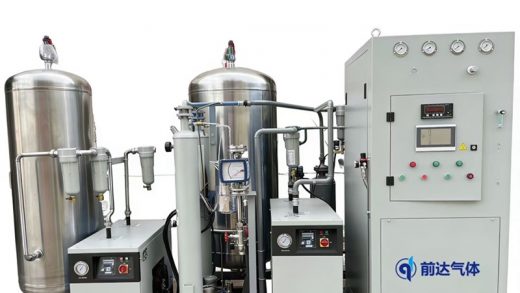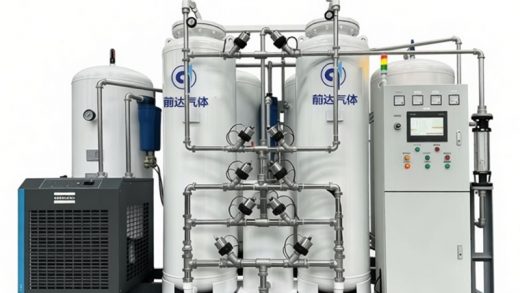

Pressure Swing Adsorption (PSA) is a cyclic, ambient-temperature physical adsorption process that separates gas mixtures (most commonly air) by exploiting differences in molecular diffusion rates and adsorption affinity for porous solid adsorbents, driven by periodic pressure swings (high-pressure adsorption → low-pressure desorption). As a leading gas separation and purification technology, PSA operates at near-ambient temperature (20–40°C), distinguishing it from energy-intensive cryogenic distillation, and delivers higher purity than membrane separation for medium-to-large industrial gas demands.
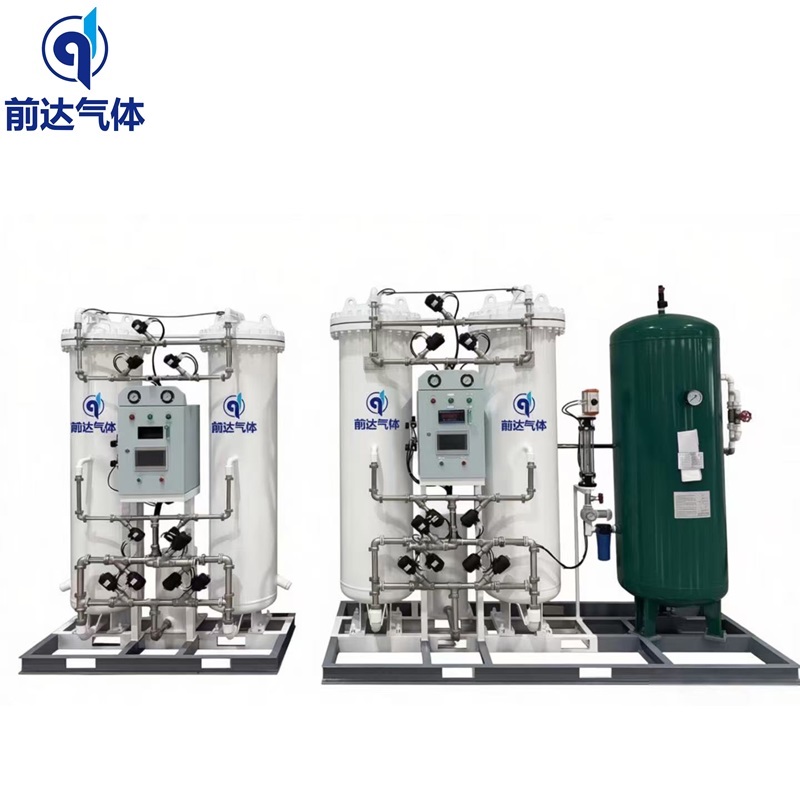
Core Value Proposition
PSA enables on-site, on-demand gas production (nitrogen, oxygen, hydrogen, CO₂) with rapid start-up (1–5 minutes), flexible purity adjustment (95%–99.9995% N₂), moderate capital expenditure (CAPEX), and lower operational expenditure (OPEX) compared to delivered liquid gases or cryogenic systems. It is the dominant technology for medium-purity (97%–99.999%) and medium-flow (10–1000 Nm³/h) industrial gas supply.
Fundamental Scientific Principles of PSA
Kinetic Separation vs. Equilibrium Separation
PSA relies on kinetic separation (not equilibrium separation), which leverages differential molecular diffusion rates into microporous adsorbents (pore size: 0.3–1 nm). For air separation (O₂/N₂):
- Oxygen (O₂): Kinetic diameter = 0.346 nm; fast diffusion into adsorbent pores
- Nitrogen (N₂): Kinetic diameter = 0.364 nm; slow diffusion into adsorbent poresThis size difference causes O₂ to be selectively adsorbed, while N₂ passes through as product gas—no equilibrium selectivity required.
Adsorption Thermodynamics: Langmuir Isotherm
PSA adsorption capacity follows the Langmuir adsorption isotherm:
Higher partial pressure → greater adsorbate loading on adsorbent surface.
- Adsorption phase (5–10 bar g): Elevated pressure drives O₂ into CMS pores, maximizing O₂ retention
- Desorption phase (near-atmospheric pressure): Pressure reduction breaks van der Waals forces, releasing adsorbed O₂ and regenerating the adsorbentThis “pressure swing” cycle defines PSA’s core operation.
Adsorbent Selectivity: The Role of Carbon Molecular Sieve (CMS)
The most critical PSA component is the Carbon Molecular Sieve (CMS), a porous carbon-based material manufactured via controlled pyrolysis of coal, coconut shell, or polymers, followed by chemical vapor deposition (CVD) for pore tuning. Key CMS properties:
- Uniform micropore distribution (0.3–1 nm) for kinetic selectivity
- High mechanical strength (resists cyclic pressure stress)
- BET surface area: 400–800 m²/g
- Bulk density: 0.65–0.75 g/cm³CMS exhibits finite dynamic O₂ adsorption capacity (2–6 mmol/g) at standard conditions, with saturation occurring at 30–120 seconds (adsorption breakthrough).
Dual-Tower PSA Cycle: Step-by-Step Operational Mechanism
Commercial PSA systems use two identical adsorption towers operating out of phase for continuous gas production. The standard 4-step cycle (60–240 seconds total) is as follows:
Step 1: Pressurized Adsorption (Tower A)
- Pre-treated compressed air (oil/water/particle-free, pressure dew point ≤ -40°C) enters Tower A at 5–10 bar g
- O₂ diffuses rapidly into CMS pores and is adsorbed; N₂ exits as high-purity product gas to a buffer tank
- Duration: 30–120 seconds (purity-dependent; 60 seconds for 99.5% N₂)
- Tower B is in regeneration mode during this phase
Step 2: Pressure Equalization
- Inlet valve to Tower A closes; equalization valve between towers opens
- High-pressure gas (mostly N₂) from Tower A flows to Tower B, recovering 70–80% of pressure energy
- Duration: 2–5 seconds (improves energy efficiency by 15–20%)
Step 3: Depressurization & Regeneration (Tower A)
- Tower A vents to atmosphere; pressure drops to near-ambient, desorbing O₂ from CMS
- Purge regeneration: 5–20% of product N₂ flows backward through Tower A to sweep residual O₂
- Duration: 30–90 seconds (complete CMS regeneration)
Step 4: Repressurization & Cycle Switch
- Equalization valve closes; Tower B is slowly repressurized with product N₂ to adsorption pressure
- Towers switch roles: Tower B adsorbs, Tower A regenerates
- Duration: 2–5 seconds; cycle repeats continuously
Core System Components & Functions
Compressed Air Pre-Treatment System
Raw compressed air contains oil mist, water vapor, and particulates that degrade CMS (reducing lifespan to <2 years). A standard pre-treatment train includes:
- Refrigerated/desiccant air dryer: Pressure dew point ≤ -40°C
- Coalescing filters (0.01–0.1 μm): Removes oil mist (<0.01 mg/m³)
- Activated carbon filter: Eliminates hydrocarbon vaporsProper pre-treatment extends CMS lifespan to 5–10 years.
Adsorption Vessels (Towers)
- Pressure vessels (carbon steel/stainless steel) designed for cyclic pressure loads
- Internal components: Bed support screens (prevents CMS loss), flow distributors (prevents channeling), bed compaction springs (reduces attrition)
PLC-Controlled Valve Manifold
- High-cycle pneumatic/solenoid valves direct gas flow per PLC sequence
- PLC monitors: Product gas purity (in-line O₂ analyzer), tower pressure, cycle timing
- Adaptive control: Adjusts cycle time to maintain purity during inlet air temperature/flow fluctuations
Product Buffer Tank
- Smooths pressure fluctuations from tower switching; provides stable gas supply
- Volume sized for 30–120 seconds of average demand
Performance Parameters & Optimization
Purity Range & Industrial Mapping
PSA delivers 95.0%–99.9995% N₂ (5 ppm O₂) with application-specific purity grades:
- 95%–99.0%: Fire prevention, tank blanketing, tire inflation
- 99.0%–99.9%: Food MAP packaging, pharmaceutical inerting
- 99.9%–99.99%: Electronics reflow soldering, heat treatment
- 99.999%–99.9995%: Chemical inerting, laboratory use (with post-treatment)
Flow Rate-Purity Tradeoff
For fixed CMS volume: Higher purity → lower flow rate (inverse relationship):
- 95% N₂: Recovery = 60%–70%
- 99.9% N₂: Recovery = 35%–45%
- 99.999% N₂: Recovery <20%Over-specifying purity increases energy consumption by 30%–50%.
Key Performance Factors
- Inlet air temperature: Optimal 20–35°C; >40°C reduces CMS capacity by 25%
- Operating pressure: 5–10 bar g; higher pressure boosts production but energy use
- CMS degradation: Pore fouling (oil/water) or attrition reduces selectivity over time
- Cycle time tuning: Shorter cycles (higher purity, lower recovery); longer cycles (higher flow, breakthrough risk)
PSA vs. Competing Gas Separation Technologies
表格
| Parameter | PSA Nitrogen Generator | Membrane Separation | Cryogenic Air Separation |
|---|---|---|---|
| Purity Range | 95%–99.9995% | 95%–99.9% | 99.999%–99.9999% |
| Dew Point | -40°C to -60°C | -40°C | -70°C to -90°C |
| Start-Up Time | 1–5 minutes | <1 minute | Several hours |
| Turndown Flexibility | Excellent (20%–120% load) | Moderate | Poor (<50% load unstable) |
| Maintenance Complexity | Medium (valves + CMS every 5–10 years) | Low (filter changes only) | High (turbomachinery, cold box) |
| Ideal Capacity | 5–3000 Nm³/h | 0.5–500 Nm³/h | >2000 Nm³/h |
| CAPEX | Moderate | Low | High |
| OPEX (Medium Flow) | Lowest | Medium | High |
PSA Advantage: Optimal for 10–1000 Nm³/h, 97%–99.999% purity applications, balancing cost, flexibility, and performance.
Industrial Applications of PSA Technology
Food & Beverage
- Modified Atmosphere Packaging (MAP): 99.5%–99.9% N₂ displaces O₂, extending shelf life of snacks, coffee, and produce by 2–5x
- On-site production eliminates cylinder logistics and contamination risks
Electronics Manufacturing
- Reflow/wave soldering: <10 ppm O₂ atmosphere prevents oxidation of solder joints
- PSA + deoxo units achieve 99.9995% N₂ for critical semiconductor processes
Metal Heat Treatment
- Bright annealing, nitriding, sintering: 99.99% N₂ protective atmosphere prevents surface oxidation
- Eliminates liquid nitrogen storage and handling hazards
Chemical & Pharmaceutical
- Reactor/tank blanketing: 97%–99% N₂ prevents explosive solvent vapor mixtures
- Remote monitoring enables unmanned operation in hazardous areas
Hydrogen Purification & CO₂ Capture
- PSA hydrogen purification: Recovers 99.9%+ H₂ from steam reforming or industrial tail gas
- PSA CO₂ capture: Separates CO₂ from flue gas (90%+ capture efficiency) for carbon capture, utilization, and storage (CCUS)
Maintenance & Troubleshooting for PSA Systems
Daily/Weekly Checks
- Verify O₂ analyzer calibration (critical for purity control)
- Monitor inlet air pressure (5–10 bar g) and dew point (≤ -40°C)
- Inspect valve operation for abnormal noise (indicates wear)
Quarterly/Annual Maintenance
- Replace pre-filters when pressure drop >0.5 bar
- Test safety relief valves and pressure gauges
- Log cycle times and flow rates to detect performance drift
CMS Replacement Indicators
- Uncorrectable purity decline (cycle tuning ineffective)
- Shortened adsorption times (increased energy cost)
- CMS fines in downstream filters (attrition)CMS Lifespan: 5–10 years with proper pre-treatment.
Pressure Swing Adsorption (PSA) is a mature, versatile, and cost-effective gas separation technology that uses cyclic pressure swings and selective adsorption on porous media (e.g., CMS) to produce high-purity nitrogen, oxygen, hydrogen, and CO₂ at ambient temperature. Its unique combination of rapid start-up, flexible purity/flow control, moderate CAPEX, and low OPEX makes it the preferred choice for medium-scale industrial gas supply across food, electronics, metalworking, chemical, and energy sectors.